Cart
0
There is a version of this conversation that ends with someone telling you to spend a fortune on equipment before you can enjoy great coffee at home. That version is not useful to anyone.
The truth is simpler. Café quality coffee at home is achievable with modest equipment and the right knowledge. What separates a genuinely great home brew from a mediocre one is not how much you spent on your setup. It is understanding four variables and getting them right consistently.
At Grão Coffee, we work with home brewers across Pakistan every day. This guide covers everything you actually need to know, without the noise.
Four Variables, Every Cup
Every cup of coffee is the result of four variables working together. Get all four right and the result is consistently excellent. Get one wrong and the whole cup suffers. Those four variables are the beans, the grind size, the water temperature, and the coffee-to-water ratio. Every problem you have ever had with home brewed coffee traces back to one or more of these. Every improvement you make will come from adjusting one of them.
Start with the Beans
No brewing method rescues poor quality beans. This is the most important thing to understand about home brewing and the one most people get wrong by starting at the equipment stage rather than the ingredient stage.
Specialty grade Arabica beans, roasted fresh and purchased directly from a roastery, give you the highest possible ceiling for flavor before you touch a single piece of equipment. The Specialty Coffee Association recommends beans roasted within the last four weeks for optimal brewing ideally consumed between 7 and 20 days after the roast date, when degassing has settled and flavor compounds are at their most expressive.
If you are buying beans off a supermarket shelf with no roast date visible, you are already starting behind. Ordering from Grão Coffee's single origin range means beans dispatched fresh across Pakistan, roasted to order rather than sitting on a shelf.
Grind Size Matters More Than You Think
Grind size controls how quickly water extracts flavor from coffee. Too fine and water over-extracts, producing bitterness. Too coarse and water under-extracts, leaving the cup sour and thin. Matching grind size to your brewing method is not optional it is fundamental.
Use a coarse grind for French press, medium course for pour over methods like the V60 or Cemex, medium for drip machines, and fine for espresso. If your cup tastes bitter, grind slightly coarser. If it tastes sour and weak, grind slightly finer. Adjust one variable at a time and taste the difference before changing anything else.
Water Temperature
Water temperature directly determines how much flavor you extract from the grounds. The Specialty Coffee Association's recommended range is 90 to 96 degrees Celsius for most hot brewing methods, with 93 degrees as the widely accepted sweet spot.
Water below 90 degrees under-extracts, producing a sour, flat, underdeveloped cup. Water at a full rolling boil risks scorching delicate compounds in lighter roasts. If you do not have a temperature-controlled kettle, bring water to a boil and let it rest for 30 to 45 seconds before pouring. That one adjustment brings you within the recommended range without any additional equipment.
Measure by Weight, Not Volume
Measuring coffee by scoops and tablespoons is one of the most common reasons home brewed coffee is inconsistent. Different beans have different densities, which means the same volume of different coffees can weigh significantly different amounts.
The SCA's Golden Cup Standard recommends 60 grams of coffee per liter of water, translating to a 1:16 ratio for most filter brewing methods. For espresso, the standard is 1:2 — 18 grams of coffee yielding around 36 grams of liquid. A basic kitchen scale will do more for your home brewing than almost any other investment you can make at a comparable price.
Pick a Method That Fits Your Routine
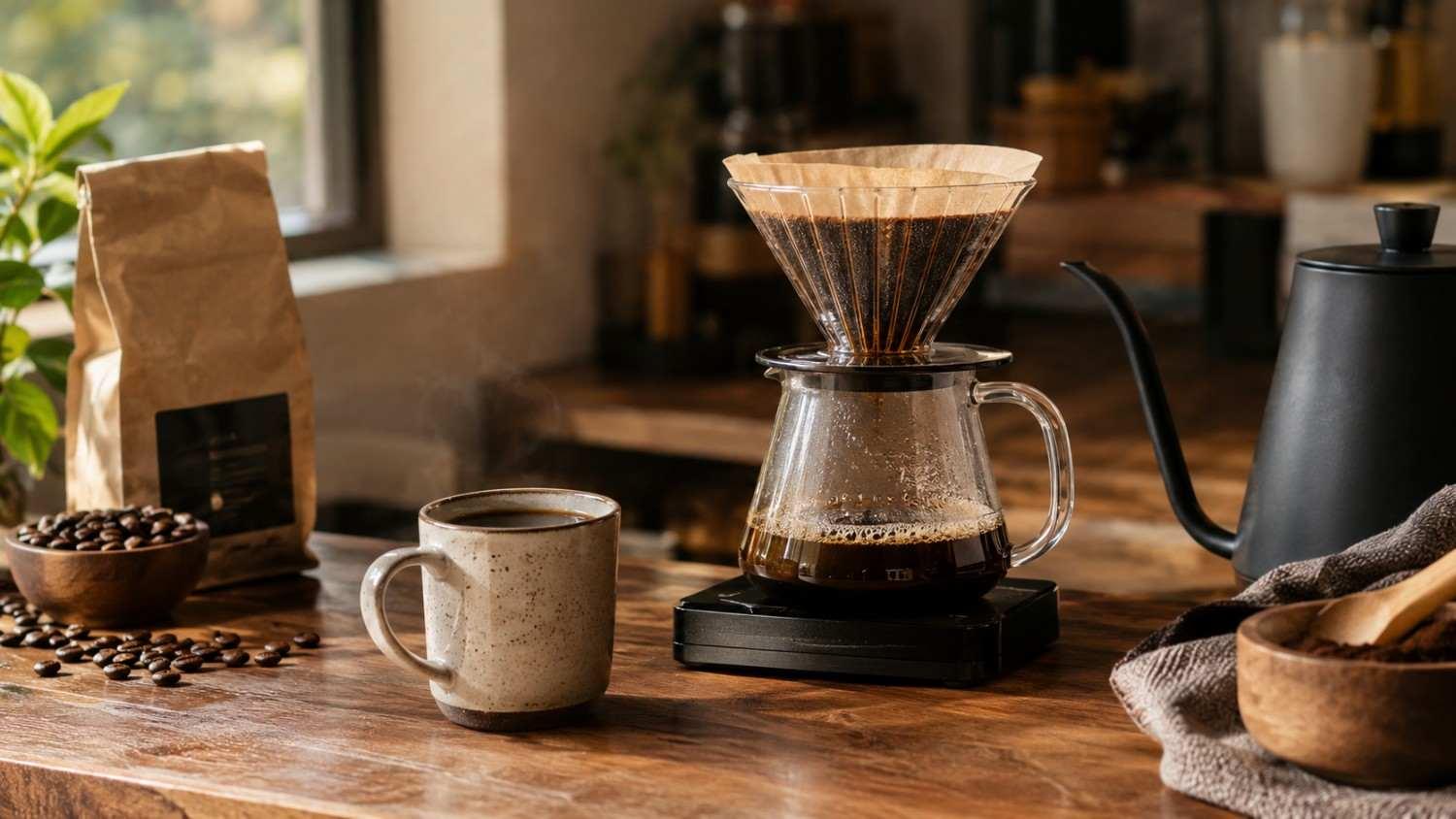
There is no single best brewing method. There is only the one that best fits your taste, your routine, and what you are willing to engage with each morning. French press is forgiving and full-bodied, ideal for beginners. Pour over produces a cleaner, more nuanced cup but requires more attention. Drip machines offer convenience with minimal involvement. Capsule machines compatible with Grão Coffee capsules remove almost all variables from the process, making them the most reliable option for anyone who wants great coffee without the decision-making.
Water Quality
Coffee is approximately 98 percent water. The quality of that water has a direct impact on everything it produces. Tap water with high chlorine content introduces off-flavors that no amount of technique can fix. Filtered or bottled water removes these variables entirely and produces a noticeably cleaner cup. If your tap water tastes unpleasant on its own, it will taste unpleasant in your coffee.
Closing the Gap with the Café
Cafés produce consistent coffee because they control variables precisely grind calibration, dose weight, water temperature, and extraction time are all dialed in and repeated identically with every cup. The equipment helps, but the discipline is what actually delivers the result.
At home, you can replicate that discipline without replicating the price tag. Fresh beans from Grão Coffee, a consistent grind, measured ratios, correct water temperature, and filtered water these five things done consistently will produce a cup that holds its own against anything your nearest café is serving. The café is not magic. It is just consistency applied reliably. That is entirely within reach at home.